
First Party Fraud Explained: Key Types, Impacts, and Prevention
In the complex world of payment disputes, not all fraud wears the same mask. While third - party attacks often grab headlines, a more insidious threat lurks within your customer base: first party fraud. This subtle form of payment abuse is costing merchants billions annually and eroding trust.
Many businesses struggle to distinguish legitimate customer disputes from deliberate first party fraud, often dismissing it as " friendly fraud " or an unavoidable business loss. This oversight leads to significant revenue leakage, operational inefficiencies, and strained customer relationships. Without a clear understanding, businesses remain vulnerable.
This comprehensive guide will unpack the intricacies of first party fraud, providing you with the tactical knowledge and actionable strategies to identify its subtle signs, mitigate its impact, and build a more resilient fraud prevention framework for your business. Equip yourself to protect your bottom line and foster genuine customer loyalty.
Understanding First Party Fraud: The Hidden Cost to Merchants
First party fraud represents a significant, often underestimated, threat to merchants across all industries. Unlike traditional fraud where a third party uses stolen credentials, first party fraud involves the legitimate cardholder intentionally misleading a merchant or payment provider to gain an advantage or avoid payment. This subtle deception can be challenging to pinpoint, blurring the lines between genuine customer disputes and malicious intent.
The financial and operational impact of first party fraud on merchants is substantial. It leads to direct revenue loss through chargebacks, increased operational costs for dispute resolution, potential fines from card networks, and damage to merchant reputation. Addressing this requires a nuanced understanding and a proactive approach.
What Exactly is First Party Fraud?
First party fraud is defined as a scenario where a legitimate cardholder deliberately misrepresents facts, abuses policies, or makes false claims to avoid payment or obtain goods/services fraudulently. This often occurs when a customer makes a purchase and then initiates a chargeback, claiming a false reason such as " item not received " or " service not rendered, " despite having genuinely received and used the product or service. The key element is the cardholder's intent to deceive for personal gain.
Why First Party Fraud is So Challenging for Businesses
First party fraud is particularly challenging for businesses because it originates from what appears to be a trusted customer interaction. The perpetrator uses their own valid payment credentials and often leverages knowledge of a merchant's policies or dispute processes. In our experience, the most common hurdle for merchants is the subtle nature of first party fraud, often blurring the lines with genuine customer issues. This makes it difficult to distinguish from friendly fraud, which is often unintentional, or legitimate customer dissatisfaction. The ambiguity forces merchants to invest significant resources in investigation, often with limited ability to recover losses.
Unmasking the Many Faces of First Party Fraud (Types & Examples)
First party fraud is not a monolithic issue; it manifests in various forms, each requiring a tailored approach to identification and prevention. Understanding these different types is crucial for merchants to develop robust fraud management strategies. From deceptive applications to exploiting return policies, the methods are diverse but share the common thread of cardholder deceit.
Deliberate Misrepresentation & Application Fraud
This type of first party fraud occurs at the initial stages of a customer relationship, where individuals provide false information to gain access to services or products they wouldn't otherwise qualify for. Application fraud can involve falsifying income, employment history, or even creating synthetic identities. Synthetic identity fraud, for example, combines real and fake information to create a new identity, often used to open accounts and then default on payments. An example is a customer applying for a high - value loan or credit line by fabricating employment details or using a partially real, partially fake Social Security number.
" False " Claims & Policy Abuse
Policy abuse involves a customer intentionally exploiting a merchant's generous return, refund, or service terms for their own benefit. This can include returning items that have been used or damaged, falsely claiming an item was never received to get a free replacement, or exaggerating issues to receive compensation. For instance, a customer might purchase an expensive dress, wear it once, and then return it claiming it was damaged upon arrival. Another common scenario is a customer claiming a digital subscription wasn't activated, despite having full access and use of the service. These actions are often disguised as legitimate customer service issues.
Chargeback Abuse & "Friendly Fraud" (The Gray Area)
Chargeback abuse, sometimes referred to as " friendly fraud " or " cyber shoplifting, " is a significant component of first party fraud. This occurs when a cardholder makes a legitimate purchase but then disputes the transaction with their bank, falsely claiming a reason like " merchandise not received " or " unauthorized transaction." While friendly fraud can sometimes be unintentional (e.g., a family member making a purchase the cardholder doesn't recognize), first party fraud specifically refers to the deliberate intent to defraud the merchant. An example is a customer ordering takeout food, enjoying the meal, and then calling their bank to dispute the charge, claiming they never received the order. Our team has observed that while many assume that high - value transactions are the primary target, we often observe first party fraud manifesting in smaller, repeated instances that fly under the radar.
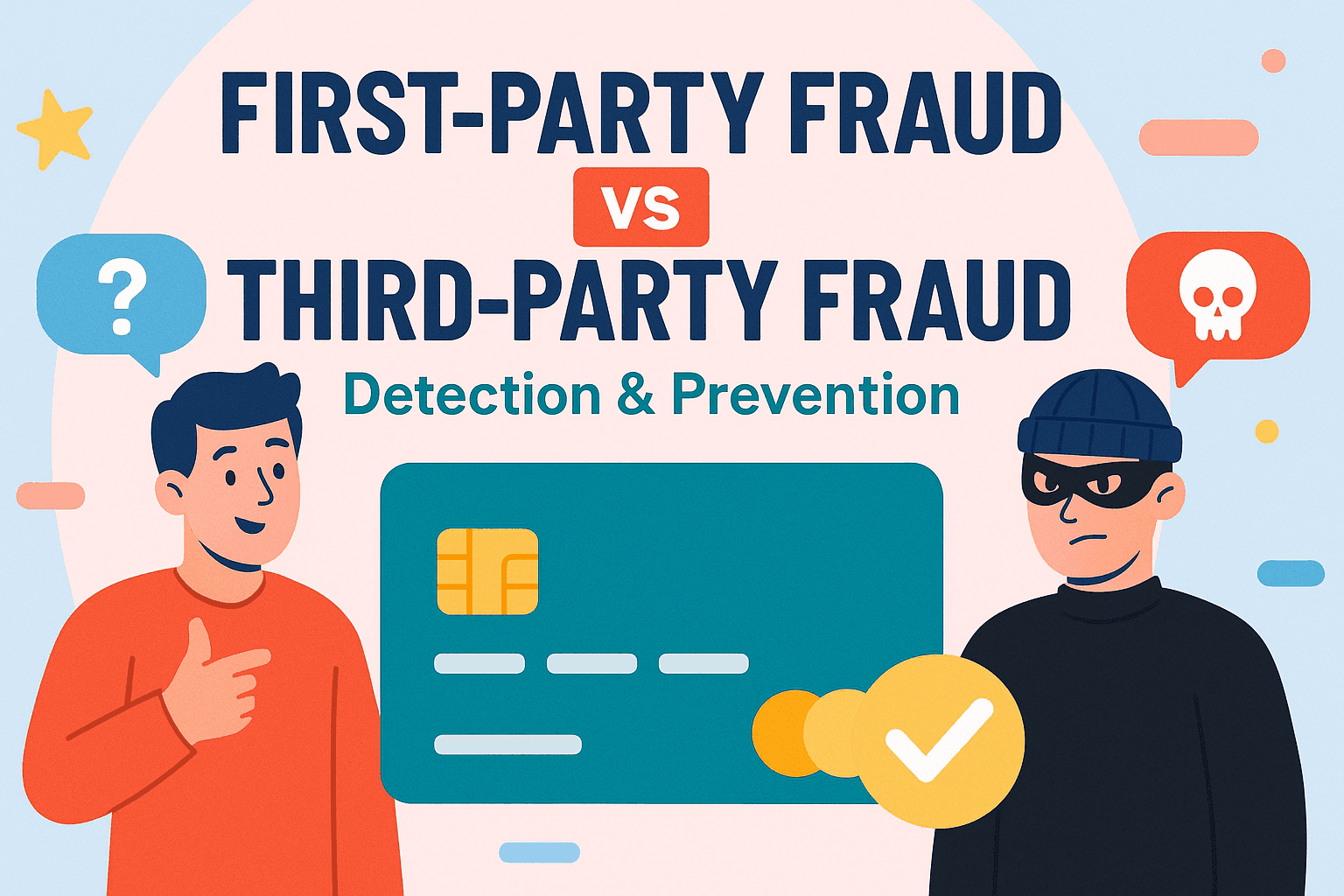
First Party vs. Third Party Fraud: Knowing the Difference
Understanding the distinction between first party fraud and third party fraud is fundamental for effective fraud prevention. While both lead to financial losses for merchants, their origins, detection methods, and mitigation strategies differ significantly. Misclassifying fraud can lead to ineffective prevention efforts and misdirected resources.
Key Differentiating Factors
The primary difference lies in the identity of the perpetrator. Third party fraud involves an unauthorized individual using stolen payment credentials, often a stolen credit card number, to make purchases. The legitimate cardholder is unaware of the transaction until they see it on their statement and disputes it as unauthorized. This is often characterized by mismatched billing/shipping addresses, unusual transaction patterns, or rapid purchases of high - value goods.
First party fraud, conversely, involves the actual cardholder initiating the fraudulent act. They use their own legitimate payment information but with deceptive intent. This means the name, address, and card details will typically match, making it much harder to detect through traditional fraud screening methods. The intent of the cardholder is the critical differentiator.
Here's a quick comparison:
Feature | First Party Fraud | Third Party Fraud |
|---|---|---|
Perpetrator | Legitimate cardholder | Unauthorized individual (fraudster) |
Payment Method Used | Cardholder's own valid card/account | Stolen or compromised card/account |
Intent | Deliberate deception to avoid payment or gain | Unauthorized use of another's funds |
Detection Challenge | Appears as legitimate customer activity | Mismatched data, unusual patterns |
Impact on Cardholder | Often none (they benefit from the fraud) | Financial loss, identity theft concerns |
Examples | False chargeback claims, policy abuse, application fraud | Stolen credit card purchases, account takeovers |
Detecting First Party Fraud: Red Flags & Data Signals
Detecting first party fraud requires a keen eye for subtle discrepancies and a robust data analysis framework. Since the fraudster is the legitimate cardholder, traditional fraud detection methods focused on stolen credentials may fall short. Instead, merchants must look for behavioral patterns, transactional anomalies, and leverage technology to uncover deceptive intent.
Behavioral Indicators of Suspicious Activity
Observing customer behavior can reveal subtle red flags. Watch for customers who frequently return items, especially high - value goods, or repeatedly claim " item not as described " without providing clear evidence. Other indicators include multiple accounts created by the same individual, frequent address changes, or unusual patterns of interaction with customer service, such as repetitive inquiries about refund policies or aggressive demands for compensation. Customers who frequently use different payment methods for similar transactions, or those who consistently push the boundaries of return policies, also warrant closer scrutiny.
Transactional Red Flags and Order Patterns
While individual transactions might appear normal, patterns over time can expose first party fraud. Look for orders placed immediately after an account is created, especially for high - value items, or a sudden increase in purchase volume after a period of inactivity. Suspicious order patterns include multiple orders to different shipping addresses using the same billing information, or numerous small, seemingly legitimate transactions followed by a large, high - risk purchase. Additionally, pay attention to transactions that push the limits of your return or refund policies, or those tied to frequent chargebacks on other merchants.
Leveraging Technology for Enhanced Detection
Modern fraud detection tools are indispensable for identifying first party fraud. These platforms utilize advanced analytics, machine learning, and artificial intelligence to analyze vast amounts of data, including device fingerprinting, IP address analysis, behavioral biometrics, and historical customer data. They can identify subtle patterns that human analysts might miss, such as a device ID associated with multiple chargebacks across different merchant accounts. Integrating a sophisticated fraud prevention platform, such as `[Dispute Ninja's fraud prevention platform](INTERNAL-LINK-PLACEHOLDER: /dispute - ninja - platform)`, can significantly enhance your ability to detect and prevent these elusive fraud types. These tools help create comprehensive risk scores for each transaction and customer.
Preventing First Party Fraud: Best Practices & Strategies
Proactively preventing first party fraud involves a multi - layered approach that combines robust identity verification, optimized transactional safeguards, clear policy communication, and continuous monitoring. No single solution guarantees 100% prevention, so a holistic strategy is crucial for mitigating this evolving threat.
Strengthening Identity Verification & Account Security
Implementing strong identity verification at various touchpoints can deter first party fraud. Utilize Address Verification Service (AVS) and Card Verification Value (CVV) checks for all transactions. For higher - risk transactions or account creations, consider advanced identity verification methods like multi - factor authentication, biometric verification, or knowledge - based authentication questions. Continuously monitor account activity for unusual changes, such as password resets followed by large purchases or changes to shipping addresses. Ensuring robust security measures not only protects against third - party fraud but also makes it harder for legitimate cardholders to feign compromise.
Optimizing Transactional Safeguards
Configure your payment gateway and fraud rules to flag suspicious transactional behavior. Implement velocity checks to identify rapid, successive purchases or an unusually high number of transactions within a short period. Set rules to flag orders with mismatched billing and shipping addresses, especially for first - time customers or high - value items. Leverage geo - location data to identify transactions from unusual or high - risk locations. Reviewing and updating these rules regularly is essential, as fraudsters constantly adapt their tactics. These safeguards are critical components of a comprehensive `[first party fraud mitigation strategy](INTERNAL-LINK-PLACEHOLDER: /fraud - mitigation - strategies)`.
Clear Policies & Proactive Customer Communication
Transparency in your terms of service, return policies, and refund procedures is paramount. Clearly communicate what constitutes a legitimate dispute versus policy abuse. Make these policies easily accessible and understandable on your website. Proactive customer communication, such as sending order confirmations, shipping notifications, and delivery confirmations, creates a clear audit trail that can deter false claims. According to industry reports, clear communication can significantly reduce disputes. Providing excellent customer service can also prevent legitimate complaints from escalating into chargebacks, which might otherwise be mistaken for first party fraud. For detailed guidance, review `[best practices for merchant terms & conditions](INTERNAL-LINK-PLACEHOLDER: /merchant - terms - conditions)`.
Navigating Chargebacks Related to First Party Fraud
When first party fraud leads to a chargeback, merchants face the challenge of proving that the cardholder's claim is fraudulent. This process, known as representment, requires meticulous evidence gathering and a clear understanding of chargeback reason codes. Effectively navigating these disputes is crucial for recovering lost revenue and reducing future fraud.
Common Reason Codes and Their First Party Fraud Connection
First party fraud often hides behind common chargeback reason codes that appear to be legitimate customer complaints. For example, a cardholder engaging in first party fraud might use codes like " Merchandise Not Received " (Visa Reason Code 10.4, Mastercard Reason Code 4855) or " Services Not Provided " (Visa 10.5, Mastercard 4855) even if they received the goods or services. Similarly, " Not as Described " (Visa 13.1, Mastercard 4853) can be falsely claimed for items that were received as ordered but the customer simply wants to keep for free. Understanding the nuances of these codes and their potential for abuse is key. For a comprehensive overview, consult our detailed guide to chargeback reason codes.
Building a Strong Defense: Compelling Evidence
Successfully fighting a chargeback rooted in first party fraud requires compelling evidence that directly refutes the cardholder's claim. This evidence typically includes proof of delivery (tracking numbers, delivery confirmations, recipient signatures), communication logs with the customer (emails, chat transcripts, call recordings), terms of service acceptance (IP address, timestamp, checkbox confirmation), and evidence of product usage (login history for digital goods, service activation logs). Any data demonstrating the cardholder's active engagement with the product or service after the purchase date, or prior fraudulent behavior, can significantly strengthen your representment case.
Future-Proofing Your Business Against Evolving First Party Fraud
The landscape of first party fraud is constantly evolving, with fraudsters employing increasingly sophisticated tactics. To truly future - proof your business, continuous monitoring, adaptation, and investment in advanced technologies are paramount. This proactive approach ensures that your fraud prevention strategies remain effective against emerging threats.
Merchants must prioritize staying informed about the latest fraud trends and regularly reviewing their prevention protocols. The role of advanced analytics, artificial intelligence, and machine learning in fraud management will only grow, enabling businesses to detect subtle anomalies at scale. Building a culture of fraud awareness within your organization, from customer service to sales, helps create an additional layer of defense. By embracing innovation and fostering vigilance, you can build a resilient defense against the persistent challenge of first party fraud.
Conclusion
First party fraud is a pervasive and costly challenge for merchants, often hiding in plain sight within seemingly legitimate customer interactions. By understanding its diverse forms, from application fraud to deliberate chargeback abuse, businesses can move beyond simply reacting to disputes and implement proactive, data - driven prevention strategies. The distinction between first party and third party fraud is crucial, guiding your approach to detection and mitigation.
Effectively combating first party fraud requires a multi - faceted strategy encompassing robust identity verification, optimized transactional safeguards, and clear, proactive customer communication. When disputes arise, building a strong defense with compelling evidence is paramount to navigating chargebacks successfully. Embrace continuous vigilance and leverage advanced technology to future - proof your business against this evolving threat. Take action today to protect your revenue, safeguard your reputation, and build lasting trust with your genuine customers.
Frequently Asked Questions
Is first party fraud illegal?
Yes, first party fraud is illegal. While often perceived as a " gray area, " deliberately making false claims or misrepresenting facts to avoid payment or obtain goods/services fraudulently constitutes criminal fraud. Depending on the jurisdiction and the value involved, it can lead to severe legal consequences for the perpetrator, including fines and imprisonment.
How can I differentiate between friendly fraud and first party fraud?
The key differentiator is intent. Friendly fraud is often unintentional, resulting from a cardholder forgetting a purchase, not recognizing a merchant's name on a statement, or a family member making a purchase without their knowledge. First party fraud, conversely, involves a deliberate and malicious intent to deceive the merchant for personal gain, even though the cardholder made the initial purchase.
What are the common indicators of first party fraud in e-commerce?
Common indicators include frequent returns or chargebacks from the same customer, claims of " item not received " despite delivery confirmation, policy abuse (e.g., returning used items as new), creation of multiple accounts, and aggressive or unusual customer service interactions, especially concerning refunds or disputes. High - value purchases made immediately after account creation can also be a red flag.
Can first party fraud impact my payment processor relationships?
Absolutely. A high rate of chargebacks, regardless of the fraud type, can negatively impact your payment processor relationships. It can lead to increased processing fees, chargeback monitoring programs, or even the termination of your merchant account. Payment processors view excessive chargebacks as a sign of high risk.
How often should I review my fraud prevention strategies?
Fraud prevention strategies should be reviewed and updated regularly, ideally quarterly or whenever new fraud trends emerge. The fraud landscape is dynamic, and continuous adaptation is crucial. Your risk profile, transaction volumes, and product offerings may also change, necessitating adjustments to your rules and tools.
What role does customer service play in preventing first party fraud?
Customer service plays a critical role. Well - trained customer service teams can de - escalate disputes, offer refunds or exchanges, and clarify policies before a customer resorts to a chargeback. Proactive communication and empathetic problem - solving can often resolve legitimate issues, preventing them from being mislabeled as fraud or escalating into deliberate first party fraud.
What is synthetic identity fraud?
Synthetic identity fraud is a type of first party fraud where fraudsters create new identities by combining real and fabricated personal information (e.g., a real Social Security number with a fake name and address). These " synthetic " identities are then used to open accounts, build credit, and eventually commit fraud by defaulting on payments or maxing out credit lines.
What are the consequences of first party fraud for the customer?
For the customer, the consequences of first party fraud can include having their accounts flagged or closed by merchants, potential listing on fraud databases, damage to their credit score, and, in severe cases, legal prosecution with fines and imprisonment. While the immediate gain might seem appealing, the long - term repercussions are significant.

11/29/25
Bowen Xue
An expert in AI-powered chargeback dispute management, Bowen specializes in helping high-volume businesses prevent and win disputes while enabling fraud teams to handle significantly more cases.