
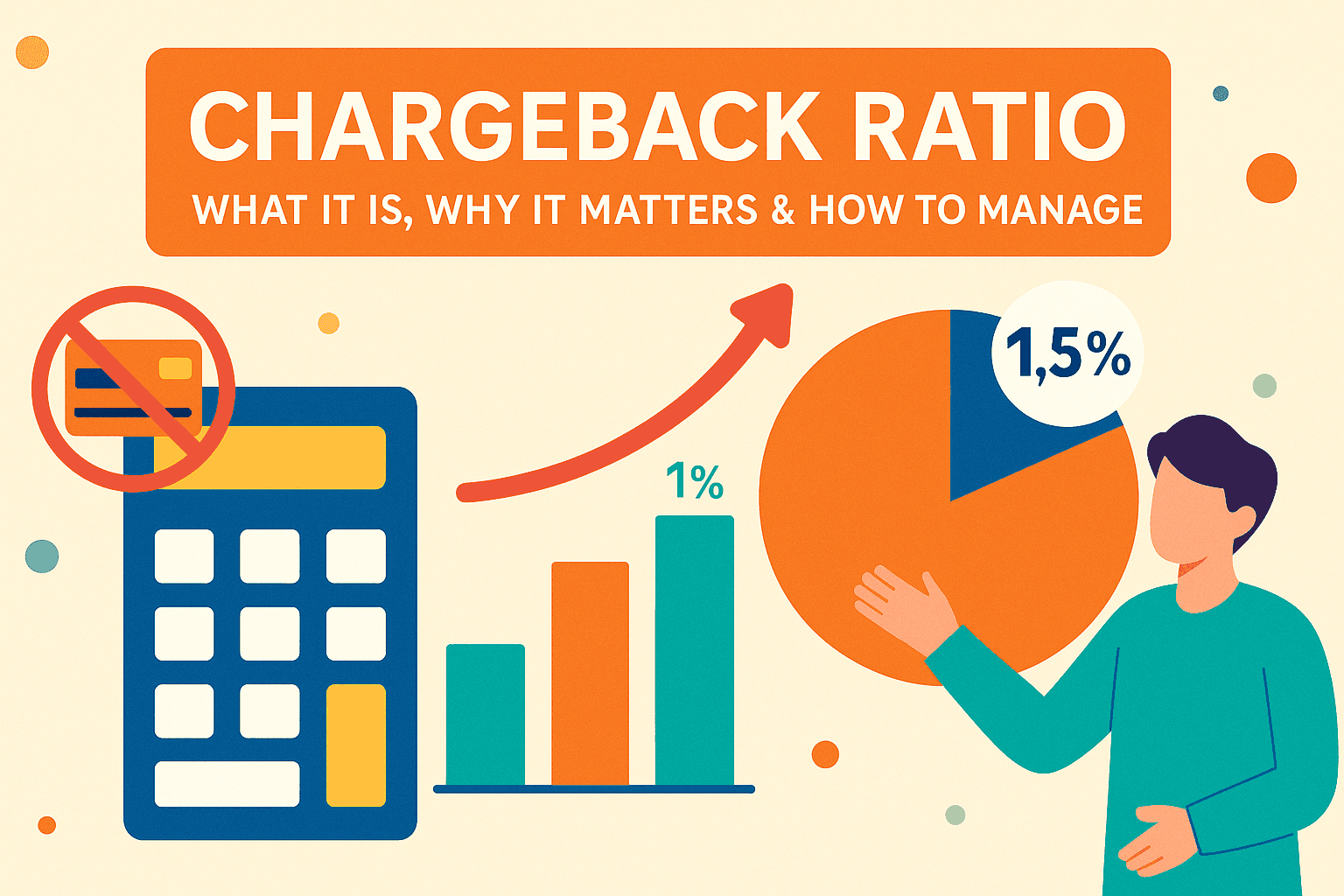
Chargeback Ratio: A Merchant's Comprehensive Guide to Calculation & Improvement
Every merchant dreads the C word: chargebacks. Beyond the immediate loss, an often-overlooked metric silently erodes your business health: the chargeback ratio. This critical indicator reflects your business's vulnerability to disputes and can significantly impact your financial stability and operational costs.
A high chargeback ratio isn't just about lost revenue; it can lead to increased processing fees, account termination, and even blacklisting from card networks. Many merchants struggle to understand this critical metric, let alone effectively manage it. This lack of understanding leaves businesses exposed to unnecessary risks and financial penalties.
This comprehensive guide will demystify the chargeback ratio, providing you with clear calculation methods, insights into its true impact, and proven, tactical strategies to not only meet but exceed industry standards, ensuring your business thrives. By the end, you will have a robust framework for calculation and improvement.
Understanding Your Chargeback Ratio: The Basics
Understanding the chargeback ratio is fundamental for any merchant operating in the digital economy. This metric provides a snapshot of your business's health regarding payment disputes, offering insights far beyond simple revenue loss. It acts as an early warning system for potential issues within your payment processing ecosystem.
A clear understanding of this ratio allows merchants to identify weaknesses, implement targeted solutions, and proactively protect their business from significant financial and reputational harm. Ignoring this key performance indicator can lead to escalating problems that impact long-term viability.
What Exactly is a Chargeback Ratio?
The chargeback ratio, also known as the chargeback rate or dispute ratio, is a key performance indicator that measures the proportion of your sales that result in a chargeback. It is calculated by dividing the total number of chargebacks received by the total number of transactions processed over a specific period, usually a month. This percentage is a direct reflection of your business's dispute performance.
For example, if you process 1,000 transactions and receive 10 chargebacks in a month, your chargeback ratio would be 1%. This metric is crucial because card networks and payment processors use it to assess a merchant's risk profile, directly influencing processing fees and account standing.
Why Your Chargeback Ratio Matters More Than You Think
A high chargeback ratio carries far-reaching implications that extend beyond the initial financial loss of a disputed transaction. Merchants face direct financial costs from lost revenue, associated chargeback fees, and increased processing rates imposed by payment processors. These fees can quickly accumulate, significantly eroding profit margins.
Beyond monetary impact, a consistently elevated merchant chargeback performance can lead to reputational damage within the payment ecosystem. It signals to card networks and banks that your business poses a higher risk, potentially resulting in account suspension, termination, or placement on industry watchlists. This can make it incredibly difficult to find new payment processing partners, effectively shutting down your ability to accept card payments.
How to Calculate Your Chargeback Ratio
Calculating your chargeback ratio accurately is the first critical step in effective chargeback management. Precision in this calculation ensures that you have a clear and unbiased view of your current performance, which is essential for setting realistic goals and measuring the effectiveness of your prevention strategies. Understanding the exact methodology helps avoid misinterpretations of your dispute trends.
This section provides a clear, step-by-step guide to calculating your chargeback ratio, along with a practical example. By following these instructions, merchants can confidently determine their own ratio and begin to identify areas for improvement. Consistent monitoring of this metric is key to sustained success.
The Standard Chargeback Ratio Formula
The standard chargeback ratio formula is straightforward:
Chargeback Ratio = (Number of Chargebacks / Number of Transactions) * 100
For this calculation method, it is crucial to define the reporting period consistently, typically a calendar month. The "Number of Chargebacks" refers to all chargebacks initiated against your merchant account within that period, regardless of their final outcome. The "Number of Transactions" encompasses all sales transactions processed during the same timeframe.
Maintaining consistency in your data collection and reporting period is paramount for accurate trending and comparison over time. Any deviation in how these numbers are gathered can skew your results and lead to incorrect conclusions about your chargeback performance.
Real-World Chargeback Ratio Calculation Example
Let's walk through a practical chargeback ratio calculation example. Imagine a small e-commerce business, "Gadget Central," processes orders in July.
In July, Gadget Central had:
Item | Description |
|---|---|
Total number of transactions | 2,500 |
Total number of chargebacks received | 20 |
Using the formula:
Chargeback Ratio = (20 Chargebacks / 2,500 Transactions) * 100
Chargeback Ratio = 0.008 * 100
Chargeback Ratio = 0.8%
In this example, Gadget Central's chargeback ratio for July is 0.8%. This practical calculation demonstrates how easily merchants can determine their own ratio using readily available data from their payment processor.
What's a "Good" Chargeback Ratio? Benchmarks & Thresholds
Understanding what constitutes an acceptable chargeback ratio is crucial for merchants. While a zero chargeback ratio is ideal, it is rarely achievable in practice. Instead, businesses should aim to stay well within industry averages and, more importantly, below the strict thresholds set by card networks.
Exceeding these thresholds can trigger significant penalties, increased fees, and even the termination of payment processing services. This section clarifies what a good ratio looks like and highlights the critical card network compliance programs.
Industry Averages and What They Mean for You
Industry chargeback benchmarks generally suggest that a healthy chargeback ratio is typically below 1%. Many payment processors and card networks consider a ratio between 0.5% and 0.9% to be acceptable. For merchants wondering what is a good chargeback ratio for e-commerce, staying under 1% is a common goal, with top performers often maintaining ratios below 0.5%.
However, these averages can vary slightly depending on the industry, business model, and geographic region. High-risk industries, for example, might naturally experience slightly higher ratios. It is important to contextualize your ratio within your specific niche but always strive for the lowest possible rate to ensure long-term stability and avoid scrutiny.
Card Network Thresholds: Visa, Mastercard, and Beyond
Card network chargeback ratio thresholds are non-negotiable limits that merchants must adhere to. Exceeding these limits triggers specific compliance programs designed to mitigate risk across the payment ecosystem. For example, Visa's Fraud Monitoring Program (VFMP) and Mastercard's Excessive Chargeback Program (ECP) are critical to understand.
Visa's threshold for its VFMP is generally a chargeback ratio of 0.9% and/or 100 chargebacks in a given month. Mastercard's ECP typically activates at a ratio of 1.5% and/or 100 chargebacks. Crossing these thresholds leads to escalating fees, mandatory remediation plans, and ultimately, the risk of being placed on the Terminated Merchant File (TMF), effectively blacklisting your business from accepting card payments. Practitioners in the field often observe that even approaching these limits can trigger increased scrutiny and fees from processors, impacting smaller merchants disproportionately.
Identifying the Root Causes of Your High Chargeback Ratio
A high chargeback ratio is a symptom, not the disease itself. To effectively lower your ratio, merchants must move beyond simply reacting to disputes and instead focus on identifying and addressing their root causes. This proactive approach involves analyzing data to pinpoint recurring issues and understanding the specific reasons customers initiate chargebacks.
By dissecting the underlying problems, businesses can implement targeted and sustainable chargeback prevention strategies. This section outlines the major categories of chargebacks and emphasizes the importance of understanding specific reason codes to diagnose your particular vulnerabilities.
Fraud-Related Chargebacks: Detection & Prevention
Fraud-related chargebacks are a significant contributor to elevated ratios, encompassing various illicit activities. This category includes traditional criminal fraud, where stolen card information is used for unauthorized purchases. It also covers"friendly fraud,"which occurs when a legitimate cardholder disputes a charge they authorized, often due to forgetfulness, buyer's remorse, or a misunderstanding of billing descriptors.
Effective fraud prevention strategies involve implementing robust fraud screening tools, such as Address Verification Service (AVS) and Card Verification Value (CVV) checks, alongside advanced machine learning algorithms. Leveraging 3 D Secure protocols adds another layer of security by requiring cardholders to authenticate their identity during a transaction, significantly reducing liability for fraud-related disputes.
Customer Disputes: Service, Delivery, & Product Issues
Customer disputes arise from issues directly related to the shopping experience, distinct from outright fraud. Common scenarios include" item not as described, "where the product received differs significantly from its online representation, or "non-receipt of merchandise," when a customer claims they never received their order. Service dissatisfaction, such as poor customer support or issues with a subscription, can also trigger disputes.
These chargebacks often stem from gaps in communication, unclear product descriptions, slow shipping, or a cumbersome return process. Addressing these requires a focus on enhancing customer satisfaction, providing accurate product information, and ensuring prompt, transparent order fulfillment. In our experience, a common misstep merchants make is underestimating the power of proactive communication. A simple shipping delay notification can prevent a 'non-receipt' chargeback entirely.
Processing Errors & Technical Glitches
Even with robust systems, internal processing errors and technical glitches can contribute to a high chargeback ratio. These are often overlooked but can be easily prevented with careful monitoring. Examples include duplicate billing, where a customer is charged twice for a single purchase, or incorrect transaction amounts. Technical issues, such as a failed authorization that still results in a charge, can also lead to disputes.
These errors can confuse and frustrate customers, prompting them to initiate a chargeback rather than seeking a refund directly. Regular reconciliation of transactions, thorough testing of payment gateways, and clear communication with your payment processor are essential steps to minimize these types of preventable chargebacks. Ensuring your billing descriptors are clear and recognizable on customer statements also reduces confusion.
Tactical Strategies to Lower Your Chargeback Ratio
Actively lowering your chargeback ratio requires a multi-faceted approach that addresses every stage of the customer journey, from pre-transaction defenses to post-purchase engagement and effective dispute resolution. Implementing a comprehensive set of chargeback prevention strategies is key to sustainable improvement and protecting your revenue.
This section provides actionable, tactical steps merchants can take to significantly reduce their dispute rate. By focusing on proactive measures and strategic responses, businesses can build resilience against chargebacks and maintain a healthy payment ecosystem.
Pre-Transaction: Bolstering Your Defenses
The first line of defense against chargebacks begins before a transaction is even completed. Implementing robust fraud screening measures, such as Address Verification Service (AVS) and Card Verification Value (CVV) checks, helps verify cardholder identity. For higher-risk transactions or industries, leveraging 3 D Secure (or EMV 3-D Secure) protocols adds an extra layer of authentication, shifting liability away from the merchant in cases of fraud.
Additionally, ensuring your billing descriptors are clear and recognizable on customer bank statements can prevent"friendly fraud"disputes. Vague or unfamiliar company names on statements often lead customers to dispute charges they don't immediately recognize. A clear, consistent descriptor reduces customer confusion and subsequent chargebacks.
Post-Transaction: Enhancing Customer Satisfaction & Communication
Many chargebacks stem from customer dissatisfaction or confusion *after* a purchase. Implementing excellent customer service best practices is paramount. This includes providing multiple clear channels for support (phone, email, chat), responding promptly to inquiries, and offering easy, transparent return and refund policies. Proactive communication, such as sending shipping updates, delivery confirmations, and post-purchase follow-ups, can significantly reduce"item not received"or"service dissatisfaction"disputes.
For instance, if a product is back-ordered, immediately inform the customer and offer alternatives or a full refund. Making it easier for customers to get a refund or resolve an issue directly with you means they are less likely to resort to a chargeback. Providing a seamless and positive post-purchase experience is one of the most effective ways to prevent customer-initiated disputes.
Dispute Resolution: Effective Representment & Prevention
Even with the best prevention, some chargebacks are inevitable. Effective dispute resolution, particularly through chargeback representment, becomes crucial. Representment is the process of challenging a chargeback with compelling evidence provided to the acquiring bank, which then forwards it to the issuing bank. This requires strong evidence gathering, including transaction receipts, shipping confirmations, communication logs, and proof of delivery.
Understanding specific detailed guide on chargeback reason codes is vital, as each code requires different types of evidence. Timely responses are also critical, as card networks impose strict deadlines for representment. Leveraging tools and services that specialize in pre-arbitration and representment can significantly improve your success rate.
Monitoring and Maintaining a Healthy Chargeback Ratio
Achieving a healthy chargeback ratio is not a one-time fix, but an ongoing process. Continuous monitoring and adaptation are essential to sustain improvements and respond to evolving fraud patterns or customer behaviors. Merchants must establish robust systems for tracking their ratio and analyzing underlying data to ensure long-term success.
This section highlights the best practices for chargeback ratio monitoring and emphasizes the importance of a dynamic, adaptive approach to chargeback management. Proactive oversight ensures that your business remains compliant and protected.
Leveraging Payment Processor Reports and Analytics
Regularly reviewing payment processor reports is fundamental for effective chargeback ratio monitoring. These reports provide detailed breakdowns of chargeback volume, reason codes, and associated fees. Beyond basic reporting, many payment gateways and specialized chargeback analytics platforms offer advanced insights. These tools can help identify trends, pinpoint specific products or customer segments prone to disputes, and even flag potential friendly fraud patterns.
By meticulously analyzing this data, merchants can gain a deeper understanding of their vulnerabilities and the effectiveness of their implemented strategies. This data-driven approach allows for targeted adjustments, ensuring resources are allocated efficiently to address the most pressing chargeback causes.
Continuous Improvement: Adapt and Evolve
Chargeback management best practices emphasize that it is not a static process. The landscape of online fraud and customer behavior is constantly evolving, requiring merchants to continuously adapt and evolve their strategies. Regularly review your prevention and representment tactics to ensure they remain effective against new threats.
Set internal targets for your chargeback ratio and establish alerts for when those targets are approached or exceeded. This allows for immediate investigation and intervention. By fostering a culture of continuous monitoring and improvement, businesses can maintain a consistently healthy chargeback ratio, protecting their revenue and reputation in the long run.
Conclusion
The chargeback ratio is more than just a number; it's a vital health indicator for any merchant, directly influencing financial stability, operational costs, and your ability to process payments. Understanding its calculation, impact, and the critical thresholds set by card networks is non-negotiable for sustainable business growth. Proactively managing this metric through robust prevention and effective dispute resolution strategies is paramount.
By implementing the tactical strategies outlined—from bolstering pre-transaction defenses to enhancing post-purchase customer satisfaction and mastering representment—merchants can significantly lower their chargeback ratio. Continuous monitoring and an adaptive approach will ensure your business not only meets but exceeds industry standards. Partnering with experts like Dispute Ninja can provide the tools and insights needed to navigate this complex landscape, protecting your profits and securing your future.
Frequently Asked Questions
How does chargeback ratio affect my payment processing fees?
A high chargeback ratio directly impacts your payment processing fees. Payment processors view merchants with higher ratios as greater risks, which often translates into increased transaction fees, additional monthly fees, or specific chargeback penalties. In severe cases, your processor might even terminate your account, forcing you to find a new, potentially more expensive, provider.
What is the difference between chargeback ratio and fraud rate?
While related, the chargeback ratio and fraud rate are distinct metrics. The chargeback ratio measures all chargebacks (fraud, customer disputes, processing errors) against total transactions. The fraud rate specifically measures fraudulent transactions as a percentage of total transactions. A high fraud rate will contribute to a high chargeback ratio, but a high chargeback ratio isn't always solely due to fraud; it can also be driven by customer service issues or operational errors.
Can I appeal every chargeback to improve my ratio?
You can appeal every chargeback, but it's not always advisable or effective. While fighting legitimate disputes is crucial for your chargeback ratio, appealing every single one, especially those with strong evidence against you, can be a time-consuming and costly endeavor with low success rates. Strategic representment focuses on winnable cases where you have compelling evidence to support your claim, ensuring your resources are used efficiently.
How long does a chargeback stay on my record?
Chargebacks typically impact your chargeback ratio for a rolling period, usually 3-6 months, depending on the card network and payment processor. However, if your ratio consistently exceeds thresholds, you can be placed on a Terminated Merchant File (TMF) or MATCH list, which is a permanent blacklist across the payment industry. This can effectively prevent you from ever processing credit card transactions again under your business name.
What if my chargeback ratio is consistently too high?
If your chargeback ratio is consistently too high, you face severe consequences, including escalating fees, mandatory compliance programs, and ultimately, account termination. Immediate action is required. This involves a comprehensive audit of your fraud prevention, customer service, and fulfillment processes, alongside a robust representment strategy. Consider engaging with specialized chargeback management services to help identify root causes and implement effective solutions.
Are there specific tools that can help me manage my chargeback ratio?
Yes, several tools can significantly help manage your chargeback ratio. These include advanced fraud detection systems (AI-powered, rule-based), chargeback alert services (which notify you of disputes before they become chargebacks), customer service platforms with robust communication features, and specialized chargeback management platforms that streamline the representment process. To see how a comprehensive solution can help, explore Dispute Ninja's services.
What role do reason codes play in my chargeback ratio?
Reason codes are crucial because they categorize the specific reason for a chargeback (e.g. "fraud," "merchandise not received," "duplicate processing"). Analyzing the prevalence of different reason codes helps you identify the primary drivers of your high chargeback ratio. This allows you to implement targeted solutions—for instance, if "merchandise not received" is common, you might improve shipping logistics or communication.
Does "friendly fraud" count towards my chargeback ratio?
Yes, "friendly fraud" absolutely counts towards your chargeback ratio. Even though it's initiated by a legitimate cardholder, it is still classified as a chargeback by card networks and impacts your ratio just like any other dispute. Effectively combating friendly fraud requires clear billing descriptors, robust customer service, and strong evidence gathering for representment.

11/30/25
Bowen Xue
An expert in AI-powered chargeback dispute management, Bowen specializes in helping high-volume businesses prevent and win disputes while enabling fraud teams to handle significantly more cases.